

Corporate-Washing: What Happens When Employees See the Dirty Laundry too?

Company corporate social relations’ (CSR) policy can sometimes tread a fine line between benevolence - making a real difference to society - and what could be called ‘corporate-washing’: creating a veneer of worthiness while leaving the underlying reality of the business unchanged or …
What Job Descriptions Get Wrong
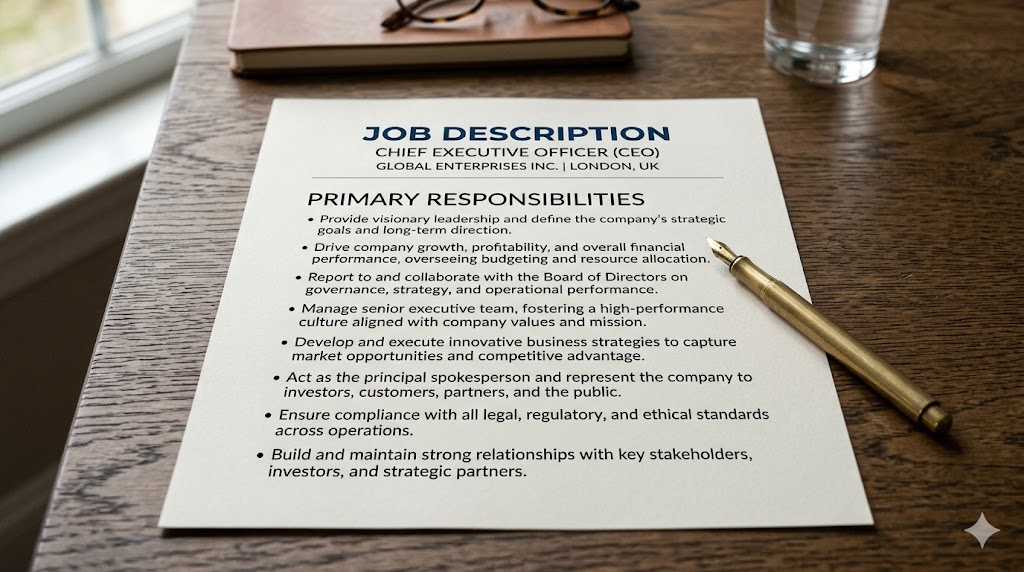
Most job descriptions are written as if motivation begins and ends with a list of tasks and responsibilities. They inform candidates what they will do, but give far less attention to why the work matters, who benefits from it, how much ownership it carries, or what kind of growth it m …
What is Executive Coaching? A Practical Guide for Senior Leaders

Most senior leaders have heard of leadership or executive coaching. Fewer can say with confidence what it is — or, more precisely, what separates a genuinely effective coaching engagement from a series of well-intentioned conversations that produce little meaningful change.
Does Executive Coaching Really Work? What the Research Says...
It is a fair question. And if you are the person holding the budget, it is probably the first one you should ask.
Executive Coaching for New Leaders: Navigating the first 90 days

The first ninety days in a new leadership role are rarely what people expect. Energy may be high, interest and curiorsity promote a desire to listen rather than instruct. And yet, within weeks, many new leaders find themselves navigating something they were not quite prepared for - th …
How Does Your Team Experience Your Leadership?

Why should anyone be led by you? It is an uncomfortable question, but a useful one. Leadership is not only visible in big moments such as strategy presentations, restructures or crises. It is felt and experienced every day in the small signals a leader sends: what they pay attention t …
How Our Personalities Shape the Meaning we Derive From Work

Not everyone finds meaning in work in quite the same way. For some, meaning comes from achievement and progress. For others, it comes from relationships, contribution, or the sense that their efforts matter to something larger than themselves. Research suggests that personality traits …
The Human Need to Belong: Why Teams Matter for Meaning and Wellbeing

Human beings are not designed to thrive in isolation. In our work, we see strong evidence that wellbeing is shaped not only by what we achieve, but by who we achieve it with. In work, this is one reason teams matter so much. A healthy team can do more than deliver results: it can stre …
A Leader's Long Shadow...

Good team leadership does more than set direction. It shapes the emotional tone, behavioural norms, and level of trust within a team. Over time, people tend to take their cues from the team leader: what gets noticed, what gets rewarded, what is safe to say, and what is better left uns …
Reconnecting with the Meaning of Work

It is not unusual for work that once felt energising and deeply meaningful to lose some of its appeal over time. Many people experience this and immediately ask themselves a difficult question: it this still worth it? The answer is not always straightforward.
Why Team Leaders Must Guard Against Groupthink

One quality of strong team leadership is the ability to create conditions for clearer thinking within the team. One of the greatest risks in any team is groupthink: a pattern in which the desire for harmony, loyalty, or speed suppresses challenge and weakens decision quality. Janis’s …